News

October 4, 2026
Cornell is expanding its expertise in artificial intelligence and data science thanks to the arrival of new faculty, with support from the Radical Collaboration initiative, building a research community that reaches across disciplines.

September 17, 2026
The researchers aim to shift TB drug development toward creating new drugs from the start to work in the combinations needed to cure tuberculosis.

September 11, 2026
Life Science Core Day, taking place Sept. 22, offers Cornell researchers a chance to explore an extraordinary range of specialized life science core facilities, technologies, and expertise available to them from across campus in one place.
September 11, 2026
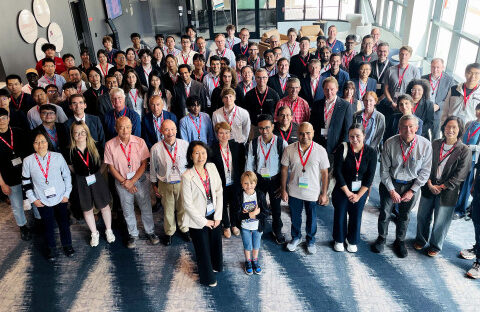
Cornell University welcomed more than 180 researchers, students, industry partners and federal leaders to Ithaca July 22–23 for the 2026 SUPREME Annual Review,
September 9, 2026
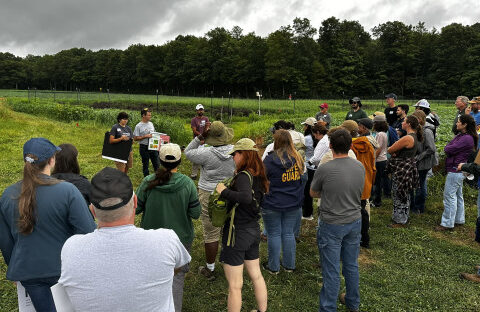
A field of tomato plants during the 2026 Aurora Farm Field Day at Cornell’s Musgrave Research Farm is testing whether a living sensor can reveal nitrogen stress under unpredictable growing conditions.

September 9, 2026
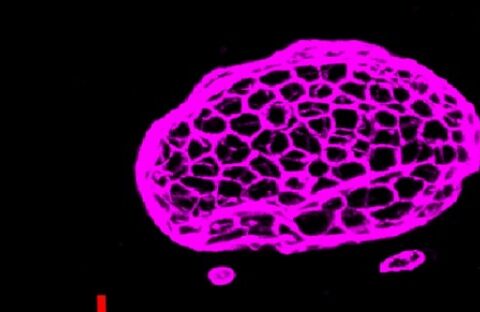
Cornell researchers have used artificial intelligence to uncover a previously unknown way cells control how proteins move inside them, a process essential for growth, communication and movement, and one that is often disrupted in cancer.
September 3, 2026
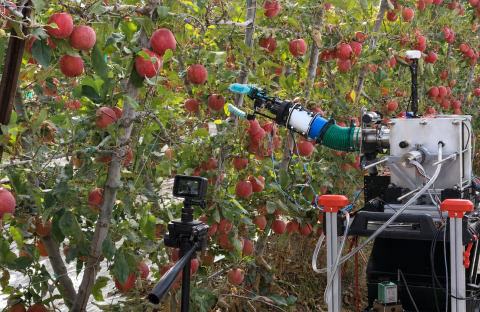
A Cornell-led research project is developing robots that can perform labor-intensive orchard operations; it’s supported by a four-year, $7.5 million grant from the U.S. Department of Agriculture’s Specialty Crop Research Initiative.
September 3, 2026
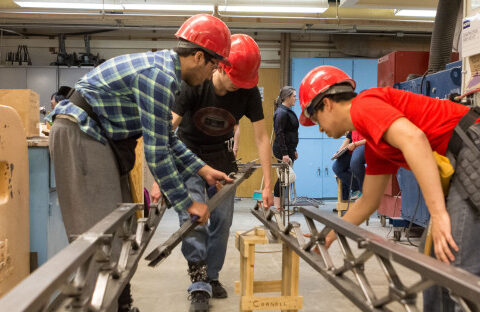
A new National Science Foundation grant awarded to the Cornell Duffield College of Engineering aims to develop a more systematic approach to teaching teamwork by helping instructors identify what they want students to learn from team experiences.

Soctera, a client of Cornell’s Praxis Center for Venture Development, is preparing to bring its next-generation radio frequency amplifier technology to commercial production following a $4 million pre-seed funding raise. The company expects its first commercial shipments in early 2027, and more than 30 prospective customers have already requested samples for evaluation.