News

October 29, 2026
Straw, mycelium, hemp and dirt are building blocks in Marta Wisniewska's research and teaching focused on designing healthier spaces that mitigate the construction industry’s environmental impact.

October 28, 2026
A family of mutations seen in about 20% of human cancers drives malignancy by changing the accessibility of genes to a particular regulatory protein, according to a study by Weill Cornell Medicine investigators.

October 26, 2026
The grant will fund a phase 1 placebo-controlled trial in healthy men, including developing an oral formulation, establishing manufacturing protocols and evaluating safety.

October 26, 2026
The new Communities of Practice for AI-enabled Research (CoPAIR) program gives researchers access to emerging AI tools, hands-on training and collaborative communities where they can share best practices, develop disciplinary norms for appropriate AI use and non-use, and evaluate new tools for research.

October 22, 2026
Reducing damage to the nuclei of heart muscle cells improved heart function and dramatically extended survival in mice with a form of inherited heart disease, according to a new study led by Cornell researchers.

October 22, 2026
The annual two-day food and agriculture business competition and networking event will take place Nov. 12-13 at the DoubleTree hotel in Rochester, New York.

October 21, 2026
Cornell Atkinson’s 2026 Postdoctoral Fellows seek to discover new antibiotics, uncover hidden corporate emissions data, and support indigenous communities’ environmental assessments of mining projects.
October 21, 2026
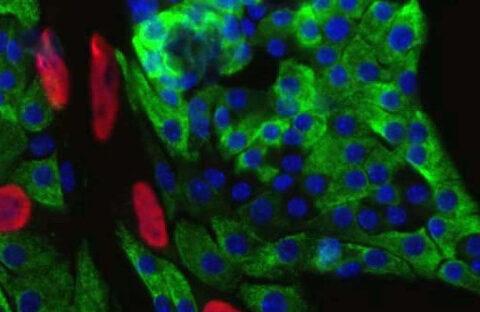
Experiments with preclinical models and human pancreatic cells found that blocking certain proteins in the pathway helped protect beta cells from excessive cellular stress.
October 21, 2026
An insect-driven disease that causes high mortality in white-tailed deer, and mimics the symptoms of foot and mouth disease in cattle, is still rare in New York state, but the warming climate may increase its spread, Cornell researchers found.